
Boundary Survey Explained: Why Property Lines Matter More Than You Think
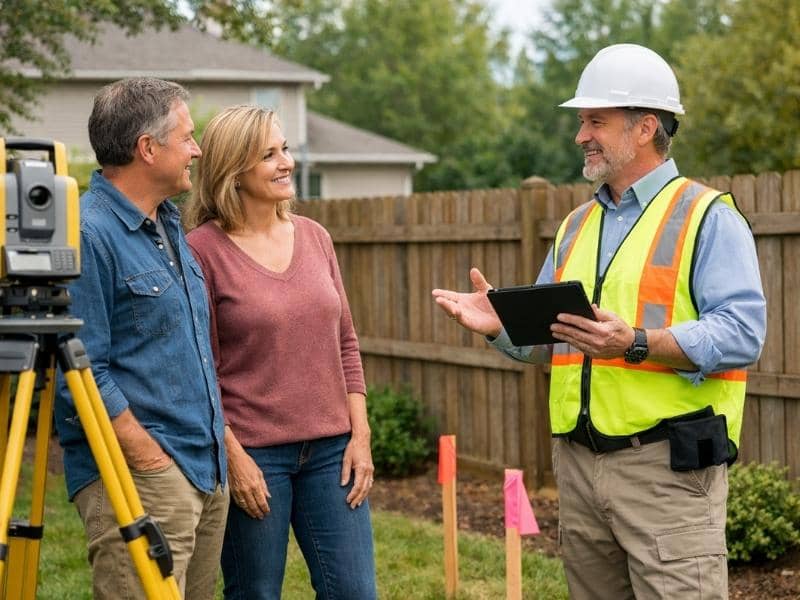
Most homeowners go years without thinking about their property lines. Things get complicated fast when a neighbor puts up a fence in the wrong spot, a new structure goes up too close to the line, or a sale falls through because of an unresolved boundary issue. A boundary survey is what keeps those problems from catching you off guard. It tells you exactly where your property begins and ends, with legal documentation that holds up when it matters most.
What a Boundary Survey Actually Establishes
A boundary survey identifies the exact legal limits of a piece of land. It is not a guess or an estimate. The results are based on deed records, recorded plats, physical evidence found on the ground, and the judgment of a licensed surveyor.
The final product is a sealed survey document. It shows the shape and size of the property, the location of corners and lines, and any important findings such as encroachments or easements. That document becomes part of the legal record tied to the property.
One thing worth knowing: title insurance, which many buyers purchase at closing, does not cover encroachments. It protects against title defects, not physical boundary problems found after the fact. A boundary survey is the only way to know whether those problems exist before they become your responsibility.
Why Property Lines Have Real Legal Weight in Alabama
In Alabama, property boundaries are not just practical markers. They carry legal weight that can affect who actually owns a piece of land.
Alabama law recognizes something called adverse possession. Under this rule, a person who openly uses a strip of someone else’s land for a long enough period of time can potentially claim legal ownership of it. For boundary line disputes between neighbors, Alabama courts have recognized claims based on as little as ten years of continuous, open use.
In plain terms: if your neighbor’s fence has been sitting two feet over your property line for years and you have never challenged it, that situation could grow into a legal problem that affects your ability to sell or use that part of your land freely.
A boundary survey gives you a clear, documented record of where your line actually sits. That record is what protects your ownership rights before an encroachment has time to turn into a legal claim against your property.
Common Situations That Call for a Boundary Survey
A boundary survey is useful in more situations than most people expect.
Before putting up a fence or adding a structure, knowing exactly where the legal line sits keeps you from crossing onto a neighbor’s property. It also prevents you from placing a fence well inside your own line and giving up land you already own.
When buying or selling property in Jefferson County or the broader Birmingham area, a current boundary survey protects both sides of the deal. It confirms that the size and shape of the parcel match what is being sold. If the survey turns up an encroachment or an unexpected easement, that information can be sorted out before closing rather than after.
When a property is being divided or subdivided, a boundary survey is a required first step. You cannot legally split a parcel without first establishing its exact boundaries.
When a neighbor dispute comes up over a fence, a structure, or access, a boundary survey creates an objective, legally supported record of where the line belongs. Alabama courts give priority to physical monuments set by licensed surveyors when deciding true boundary locations. That means a survey document carries real weight in any legal proceeding.
What the Survey Document Shows
A completed boundary survey map includes information that property owners rely on for a wide range of decisions.
It shows the length and direction of all boundary lines, expressed as exact measurements and bearings. It identifies monuments found or set during the survey, whether those are iron pins, rods, or other markers. It notes any encroachments observed, such as a neighboring fence or structure that crosses the line. It also shows recorded easements affecting the property, including their location and width.
All of this appears on a single document sealed by a licensed Professional Land Surveyor. That seal, along with the surveyor’s signature and license number, is what makes the document legally valid.
How Birmingham’s Older Neighborhoods Add Complexity
Many of Birmingham’s established neighborhoods have property records that go back decades. In older areas, monuments set by surveyors long ago may have shifted, broken down, or disappeared. Neighboring improvements may not line up with what the original plat shows. Deed language may refer to landmarks that no longer exist.
This is why a boundary survey in an older Birmingham neighborhood often takes more research than a survey on a newly platted lot. The surveyor has to weigh more evidence, work through more potential conflicts, and use more professional judgment before the boundary can be stated with confidence.
That added complexity is exactly why having a current, professionally produced boundary survey matters more, not less, when dealing with older properties.